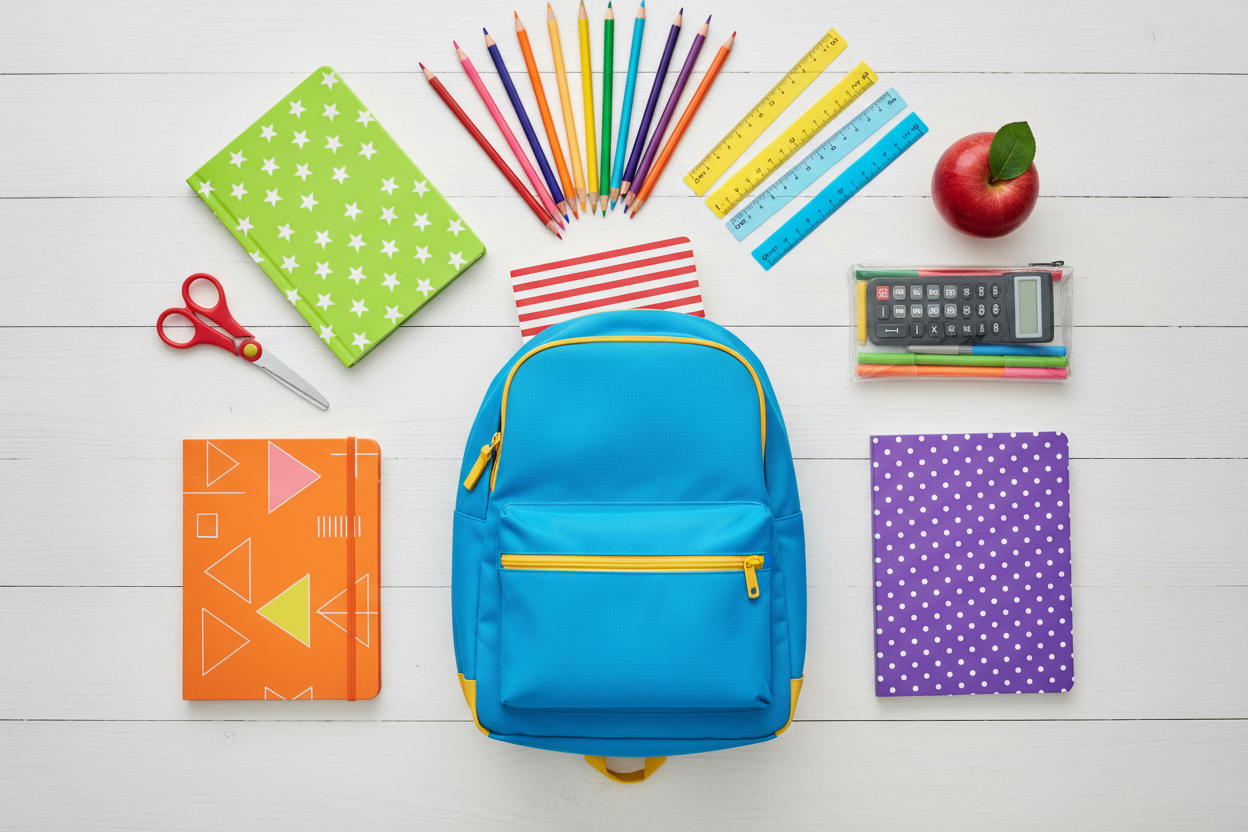
A First Grade Teacher's Back-to-School Survival Kit
I'm Miss Jaeme, and I teach first grade. I recently passed my five-year mark, typically teaching in the K-2 range, and this year I have a group of awesome first graders in Oceanside, California. If there's one thing I've learned, it's that first grade is equal parts magic and chaos, sometimes in the same five minutes. To stay purposeful and get the most important month of the year nailed down, we need to set ourselves up for success. My classroom is student-centered from the ground up. The more intentionally I set kids up to succeed, the less resistance I have to fight against later. It's built to help kids take real ownership of their own learning. I want every kid to walk into our room feeling independent, confident, and genuinely happy to be there. Led with love, always.
Right now my classroom has a good foundation of all the basics: a quiet space to calm down when emotions run high, a good mix of culturally responsive texts in my library, and a space for small group learning. But a purposeful space can always be elevated with a few crowd pleasers. September always makes me think the hardest about this. It's the month where routines are still wobbly, kids are figuring out who they are in a new room, and I'm figuring out what each of them actually needs. So I spent an afternoon going through The Sensory Site catalog, and here's what I'd grab for my September Survival Kit to kick off the school year.
Building Teamwork & Community
This one is a sensory play foam set designed around running a pretend sushi shop, complete with mats, tools, and colorful foam kids mold into different sushi pieces (the Playfoam® Sushi Shop). It caught my eye because it's not just sensory play for one kid at a time. It's built around a shared setup, which means kids naturally end up working the "shop" together instead of playing side by side.

I'd use this as a small group station where kids take on different roles: one kid molding, one kid "serving," one kid taking orders. It's a low-pressure way to practice working as a team without me assigning worksheets about teamwork. Kids figure out how to divide up a task, wait for a turn with a tool, and keep a shared space usable for the next group, all while their hands are busy with something calming.
It works for the whole class, but it's a lifesaver for the kids who do better contributing to a group when there's a clear, hands-on job to do rather than an open conversation. Watching who steps up to "run the shop" and who prefers a quieter role tells me a lot about how a group is finding its footing together.
Supporting Every Body in the Room
This one is really three tools in one: the Comfy Hugging Peapod, Adjustable Spin Chair & Wiggle Seat Cushion. All built around the same idea: kids don't all need to sit the same way to focus, and forcing them to try usually just creates more chaos than it solves. There's a peapod for kids who need to disappear into a cocoon, a spin chair for kids who need to move to think, and a wiggle seat cushion for kids who just need a little motion without leaving their seat.

Comfy Hugging Peapod

Adjustable Spin Chair
What I love about the wiggle cushion is that it's not distracting. A kid can wobble a little while they work without it turning into a whole production or pulling everyone else's attention away from their own work.
I'd tuck the peapod into the calm-down corner, offer the spin chair as an option during independent work or carpet time (with a gentle cap — a few good spins, then back to work, since too much can tip some kids over), and just drop the wiggle cushion onto a regular chair for a kid who needs to move but still needs to stay at their spot and focus.
It fits the whole range of kids in a general classroom: anxious or overstimulated kids reach for the peapod, high-energy sensory seekers gravitate toward the spin chair, and kids who need quiet, low-key movement get what they need from the cushion, all without anyone standing out for needing something different.
Calm, Quiet Transitions
These are Sounds of Weather Sensory Tubes, filled with materials that make different weather sounds, like rain or thunder, when you turn them. These are on my list because I use attention-getters constantly (the little signals that pull a class's focus back), and most of them rely on me talking louder over a room full of six-year-olds, which gets old for my voice fast.

Here's the system I'd build around them: each table group has a team captain, and when I give the signal, each captain grabs a tube. Within seconds the whole room goes from noisy to calm, without me saying a word. It's not just quiet, it's genuinely engaging, because kids are listening for the sound and waiting for their turn to be the one holding it.
It gives every table a rotating leadership moment, and it turns a transition that used to cost me my voice into something kids actually look forward to. Team captains take the job seriously, and the rest of the group naturally follows because everyone wants a turn holding the tube next.
The whole class benefits, but it's a gift for the kids who respond better to a sound or a role than to being told to be quiet. And selfishly, it saves my voice for the things that actually need it.
Literacy Routines That Run Themselves
The Sight Word Slam, Magnetic Word Builder & Phonics Word-Building Tiles are what I'd use to kick off small group reading time, and I'd lean on them hardest in September specifically. Sight Word Slam turns word recognition into a fast, game-like routine kids want to win. The magnetic word builder and phonics tiles let kids physically build words with their hands instead of just looking at them on a page.

Sight Word Slam

Phonics Word-Building Tiles
I use transitions as a teaching moment, not just a logistics problem, so these become part of how small group starts. By month three, as soon as a group sits down, they're building or slamming words within seconds. That's because I teach them this routine and the expectations for it on day one, and eventually the group is running itself. It's also how I quietly test where each kid actually is in the first month. Watching a kid build a word tile by tile tells me exactly how their phonemic awareness — their ear for the sounds inside words — is developing, without a single worksheet or formal assessment.
The magnetic word builder pulls double duty too. Beyond small group, I'd keep it out during whole group lessons on the carpet, since it keeps kids' hands busy and their attention on the lesson instead of on each other.
It's perfect for every reading level in the room. My kids who are further along get to build harder words and move fast. My kids who need more support get a hands-on way to practice that doesn't feel like being singled out. And for me, it's a low-key window into who needs what before report cards even come around.
Setting Behavior Expectations Early
You want to know how kids actually learn to treat each other? Through explicit instruction and real opportunities to practice, not just being told to "be nice." The Best Behavior Board Book Set makes that explicit teaching feel fun instead of like a lecture.

I'd introduce each book at my students' own pace rather than rushing through the whole set in one week. Give a behavior expectation time to actually sink in before moving to the next one. Once a book's been introduced, it gets a designated spot in our classroom library, so it's not just read once and forgotten.
That library spot matters more than people think. Kids need reminders, we all know they will, and having the actual book to point back to means I'm not just repeating myself. I can say "go grab the book about sharing" and let the story do some of the reminding for me.
In those first weeks it helps the whole class, and it's especially good for the kids who need to see and hear an expectation modeled a few times before it clicks, rather than just being told the rule once and expected to remember it.
Bonus Dream Pick: Rail Town & Country Dramatic Play Train Set
If money were no object, this is the one I'd bring into my classroom and never look back. It's a full wooden train set built for imaginative play, complete with tracks and town pieces kids can build into whatever world they want to create.
I'd set this up as a permanent choice-time station, something kids can return to again and again instead of a one-time activity. My trick for teaching kids to take care of materials starts on day one: assign a place for each piece. A labeled bin, a taped outline, a spot on the shelf where that piece and only that piece belongs. Clean-up isn't an afterthought here. It's a skill they learn from the start, just like everything else in the room. In a full classroom of 20-plus kids with a range of needs, that structure matters just as much as the open-ended building does. A kid who needs a movement break gets to build. A kid who needs predictability gets a system they can count on. And because everyone knows exactly where things go, kids naturally start helping each other put the town away instead of me having to manage it piece by piece.

Wrapping It Up
At the end of the day, a smooth first month isn't about having the fanciest classroom on the block. It's about giving kids systems they can count on, so all that first-grade magic has room to happen without the chaos taking over. A team captain with a weather tube, a labeled bin for every train piece, a book to point back to when someone needs a reminder. Small stuff, big payoff.
So whether you're setting up your own classroom this September or piecing together a cozy corner at the kitchen table at home, here's my two cents: pick a few things that do double duty, teach the routine on day one, and let the systems do the heavy lifting so you don't have to. Here's to a year that runs as smooth as six-year-olds possibly allow.
Share:
FREE Indoor Swedish Wall Gym Curriculum PDF Download
Meet Miss Jaeme!